
The Edge of the Stone SeaWorking title
The most demanding retreat in the collection: a week in the Berchtesgaden Alps, four days of it off the grid on the Steinernes Meer — the “Stone Sea” — a bare limestone plateau on the Austrian–German border, finishing with a guided via ferrata ascent.
Maria Alm am Steinernen Meer, Austria · 3–10 July 2027 · Advanced
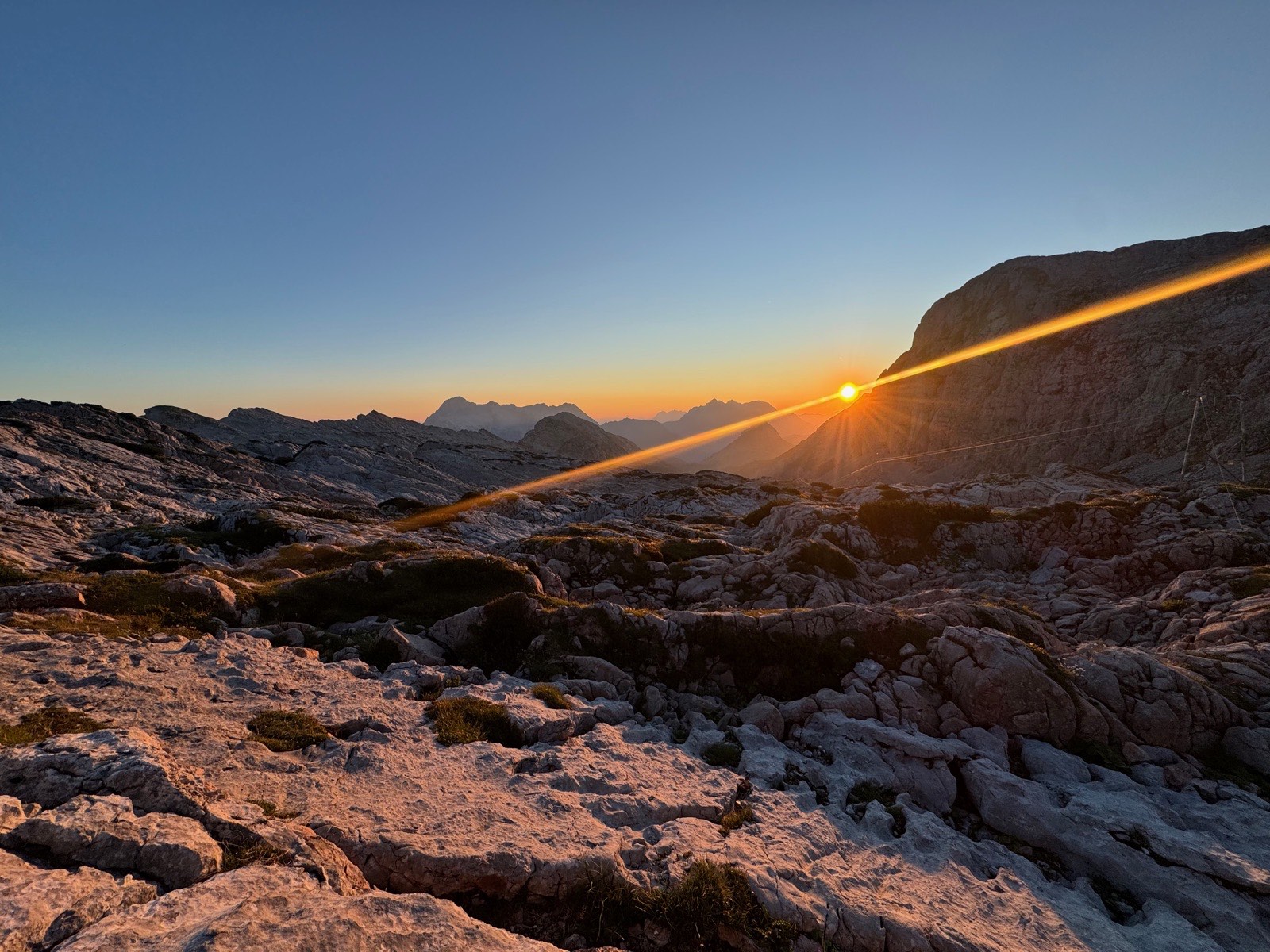
You come down off the plateau feeling like you can conquer the world. That is exactly what leadership asks of you, every day.
— Dirk H. Horn, founder, mab Partners
- Dates
- 3–10 July 2027
- On the plateau
- 4 days, no cell signal
- Group size
- 5–8 leaders
- Signature climb
- Persailhorn via ferrata, grade C
Leaders who want the stakes to be real.
People who carry a lot of responsibility and rarely make time for themselves, who are generally fit — regular hikers, comfortable on their feet for long days — but who are not athletes or climbers. No technical background is needed; the guide and the equipment handle that part. Not everyone arrives free of a fear of heights, and that is fine if it is workable.
It is not for the experienced alpinist — for them this is a warm-up. It is not a beginners’ trip and it is not a leisure holiday. If you want the leadership work of the other retreats with real physical stakes attached, and four days genuinely away from your phone, this is the one.
Real stakes, and time with people who carry the same weight.
Sustained physical and mental pressure — fatigue, altitude, exposure, the commitment of being clipped to a cable with a long drop beside you — brings out the same instincts you rely on as a leader: staying clear-headed when you are tired, managing your own fear, reading how the group is doing, knowing when to trust the guide and when to back yourself.
There is a moment on the Breithorn where the last few metres to the summit cross are exposed enough that, alone, I have turned around — I wanted someone there with me. In a group you don’t turn around; you climb it together. That is most of the lesson.
The via ferrata makes it sharper. You are roped in beside the others and the guide, and for a couple of hours your progress depends on the group’s judgment and communication — the same conditions as a high-stakes decision at work, without the email.
The rest is the people. There is a lot of unstructured time — in the huts, on the breaks, on the sun deck — and the group is chosen so that time is worth something: senior leaders from different industries comparing notes on how they actually handle things. It is not a training. Nobody is teaching you a framework or walking you through a management book. You take part in those conversations as much or as little as you want; some people come simply to be among people who understand the load.
Like the other retreats, you step back from the day-to-day and come home with one idea that changes how you lead. Here, you earn it on the plateau.
A week in the mountains. Four days off the grid.
You fly into Munich and we drive you the rest of the way. Two nights easing in at Maria Alm, then four days and three nights on the plateau, moving hut to hut across the Stone Sea. A via ferrata ascent of the Persailhorn to finish, then back down to a hotel and a closing dinner.
It is built for people who are generally fit — not athletes, and not climbers. No technical climbing background is needed. But the days are long and exposed at altitude, and you should expect to be taken well out of your comfort zone.
A certified local mountain guide is with the group the entire time. Dirk Horn, who designed the trip and has known these mountains for fifty years, travels as a member of the group. The helmet, harness and carabiners for the via ferrata are provided and fitted for you.
My connection to the Stone Sea
It started with my grandfather. He was an engineer who ran one of Berlin’s railway stations, and in 1954 a railway pass would take him clear across Europe for a few cents. On one of those journeys he got off the train at a village called Maria Alm — then just a little church and the houses around it, no tourism — and fell in love with it. He brought the family back the next year, and the year after that.
The mountains above the village are the Steinernes Meer — the Stone Sea. You climb around three thousand feet on one of a few routes and come out on a plateau that looks like another planet: bare limestone, ridged like waves, which is how it got the name. It has been a crossing for seven hundred years — in the plague years, people walked it between Austria and Germany depending on which side the sickness was on. It is a ten-hour walk from Maria Alm over to the Königssee, and once a year, in August, hundreds of people still make that trek together.
My father first brought me up there in 1977, when I was six — just the two of us, in the autumn, when the huts were already closing for the winter. Those are some of my most cherished memories. I have kept going back every few years since, across two continents. We spent our honeymoon there.
As I moved into my forties and fifties, the climb got harder. The ascent that once took me an hour and a quarter now takes two — I could go faster, but there is no point. And the exposed sections, the fixed rope in the wall where you don’t strictly need equipment but you are glad to hold on, started to make my heart race in a way they hadn’t. That turned out to be the interesting part: something real to work with, a way to get back in touch with yourself. It is not reckless and it is not foolish. But it asks enough of your attention to take you out of your comfort zone.
People kept asking whether I could turn it into something they could do — in a small group, with the right people. This is that.
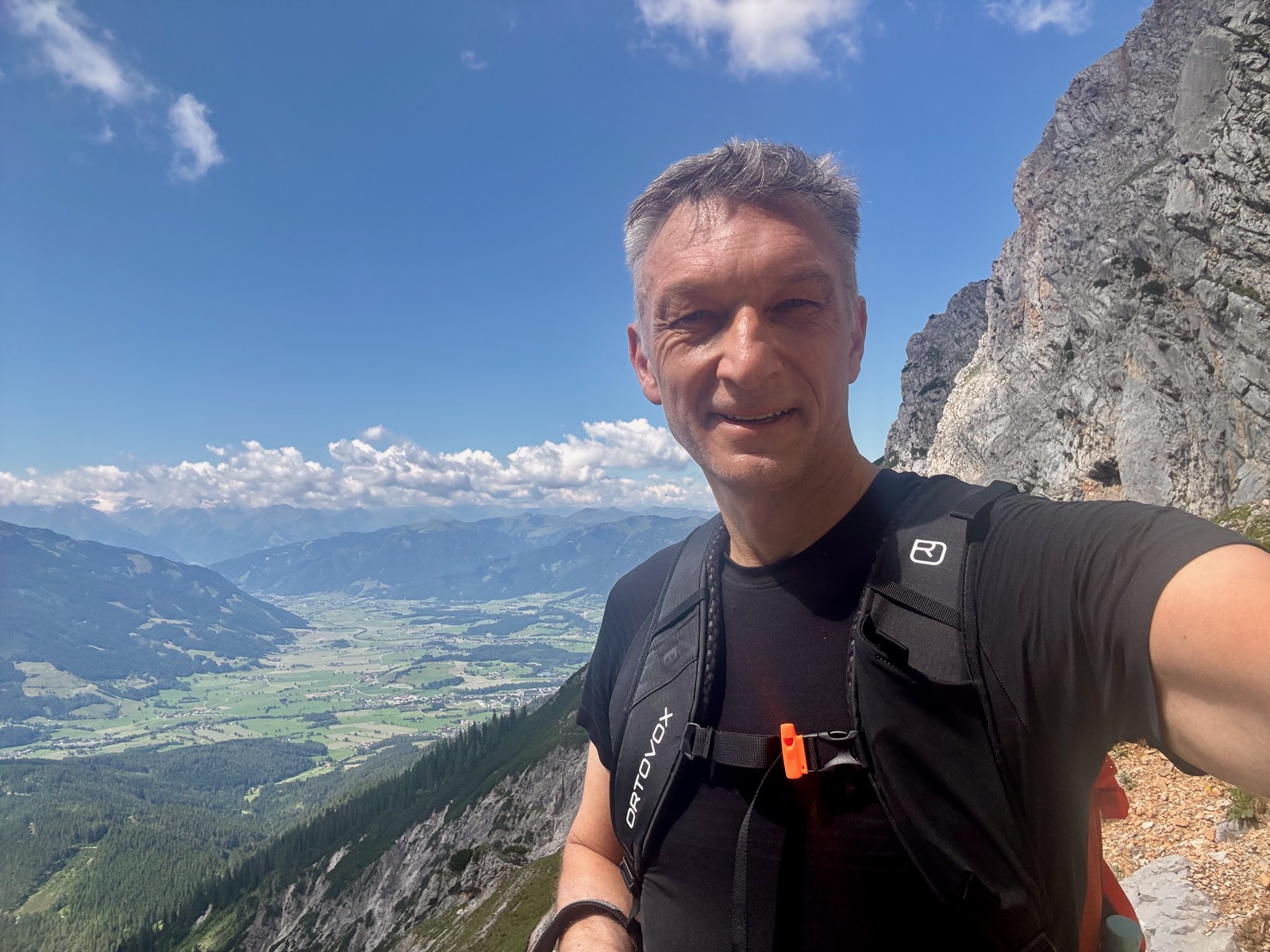
It’s a small group, and it starts with a conversation.
What the days look like
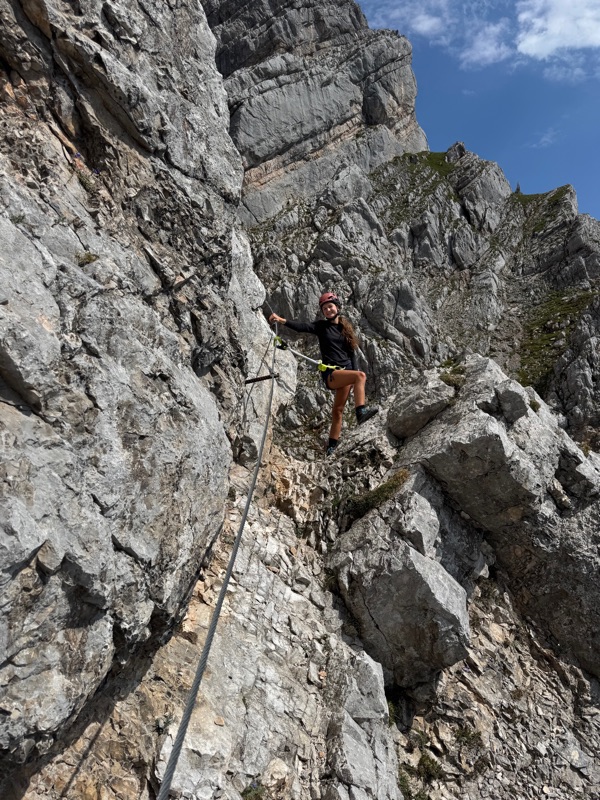
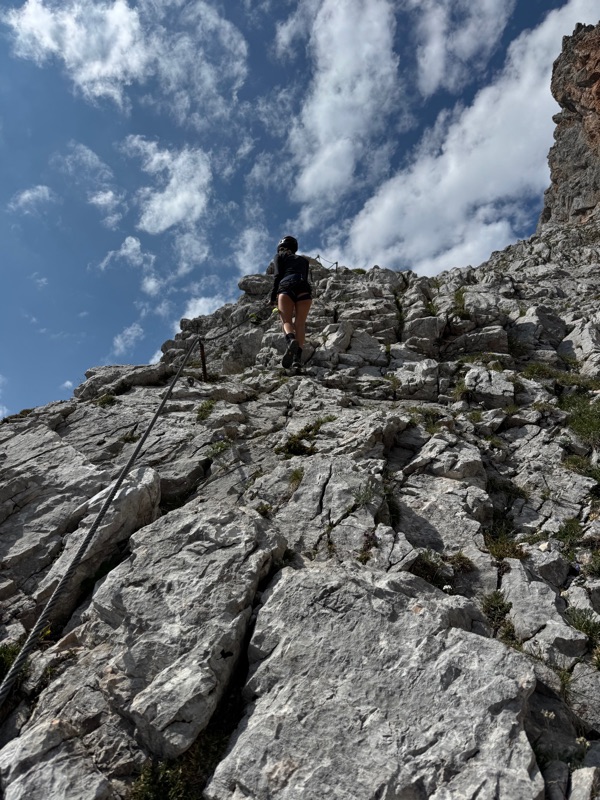
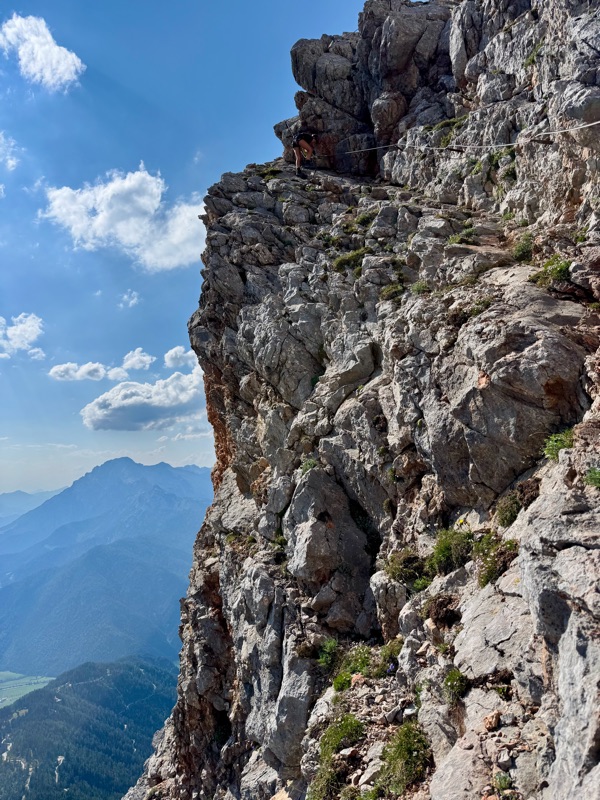
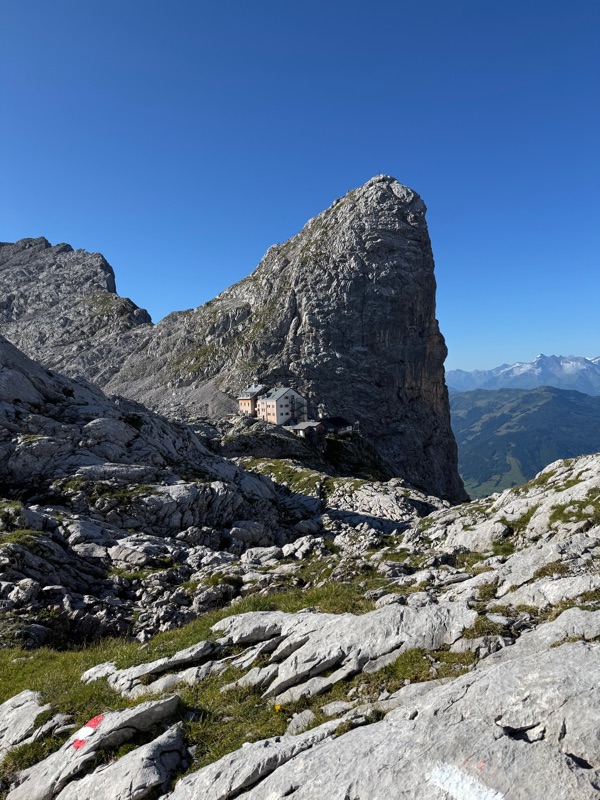
From a July expedition — the via ferrata, the exposed traverses, and the huts on the plateau.
The week, day by day.
Into the valley
We pick you up at Munich airport — about two and a half hours out. If you are coming from North America you land in the morning, so the first night is a comfortable place in the middle of Maria Alm. We eat together that evening; jet lag is built into the plan, so sleep if you need to.
Easing in
A common breakfast, then a gentler hike of around 3,000 feet on less exposed ground — einlaufen, finding your legs and letting the altitude and the time zone settle. Last night in the valley, and a dinner together before we go up.
Up to the Riemannhaus
An early start — the ascent faces south and gets hot. A bus to the trailhead, then about three hours and 3,000 feet up to the Riemannhaus, the first night on the plateau. The afternoon is yours: the sun deck, or the Sommerstein just behind the hut, and a first look at the Schönfeldspitze.
The Breithorn, and the traverse
Over the Breithorn — straightforward until a short exposed step near the top that needs your full attention, and that you do as a pair, not alone. Then the long rocky traverse to the Ingolstädter Haus: four hours stone to stone, 2,000–2,500 feet of up and down. Second night on the plateau.
The long day
A dawn climb of the Großer Hundstod for the view over the whole range, then a hard ten-hour traverse — back past the Riemannhaus, over the Weißbachscharte, down to the Peter-Wiesental-Hütte for the last night up high.
The via ferrata
Helmet, harness and carabiners on. The Persailhorn south wall — about 1,200 feet straight up, graded C on the A–E scale, clipped to a fixed cable the whole way. Over the summit and down the north wall, back to the valley by mid-afternoon, and a hotel room of your own again.
Optional: the Schönfeldspitze
For anyone with the legs for it: a 12-hour round of the Schönfeldspitze, the range’s signature summit, leaving at 6 a.m. Everyone else takes Maria Alm at their own pace — the Natrun lift up to the Jufenalm, or a quiet day. A closing dinner and debrief that evening.
Down
Check out after breakfast. The shuttle takes you back to Munich; we book an airport hotel so you can rest and fly out the next morning. If you are staying on in the area, tell us and we will help you plan it.
Indicative outline, and the German place names are as Dirk gives them. The exact route, huts, and timings are set with the local guide before departure and adjusted to the group, the weather, and hut availability.
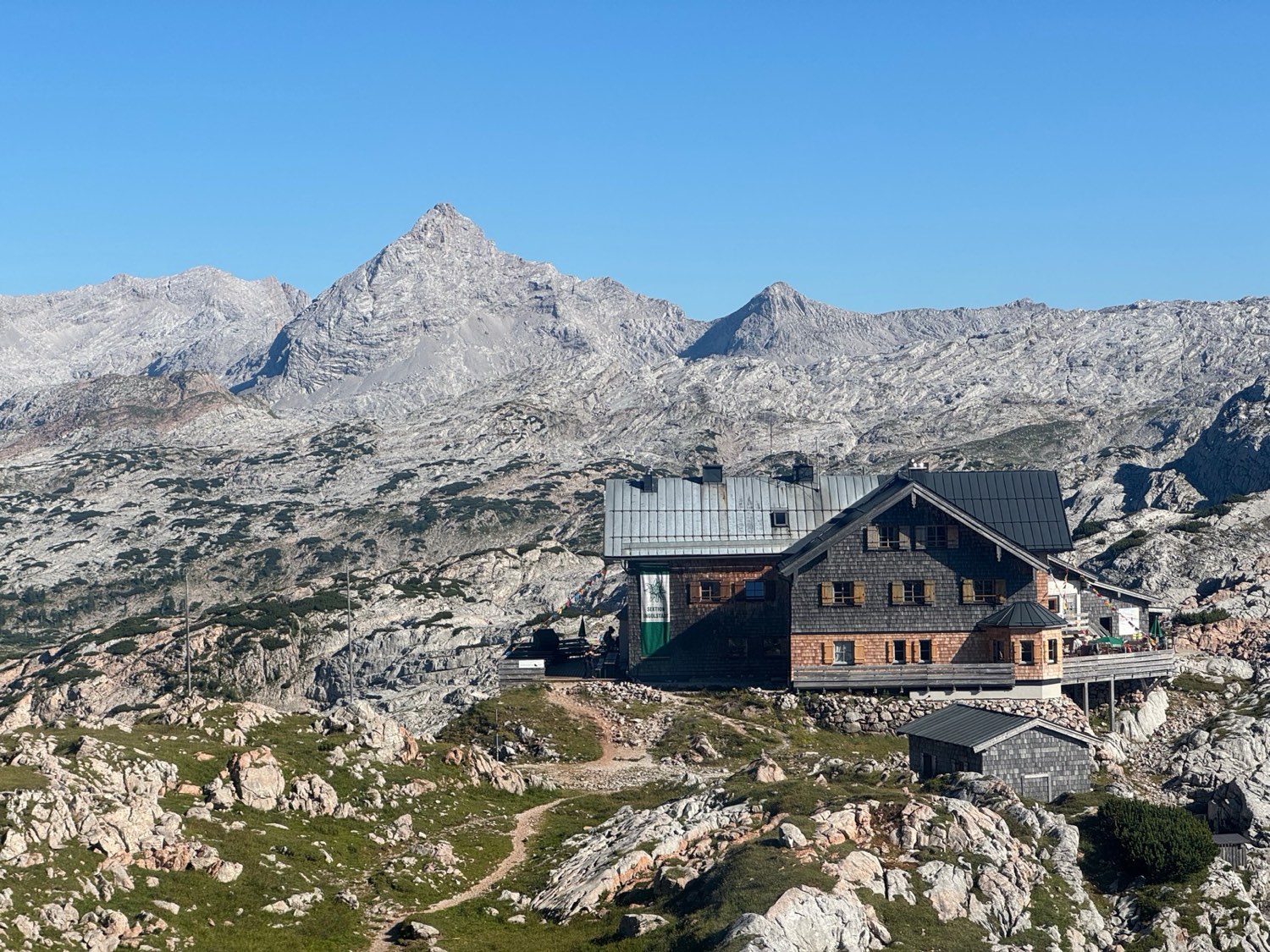
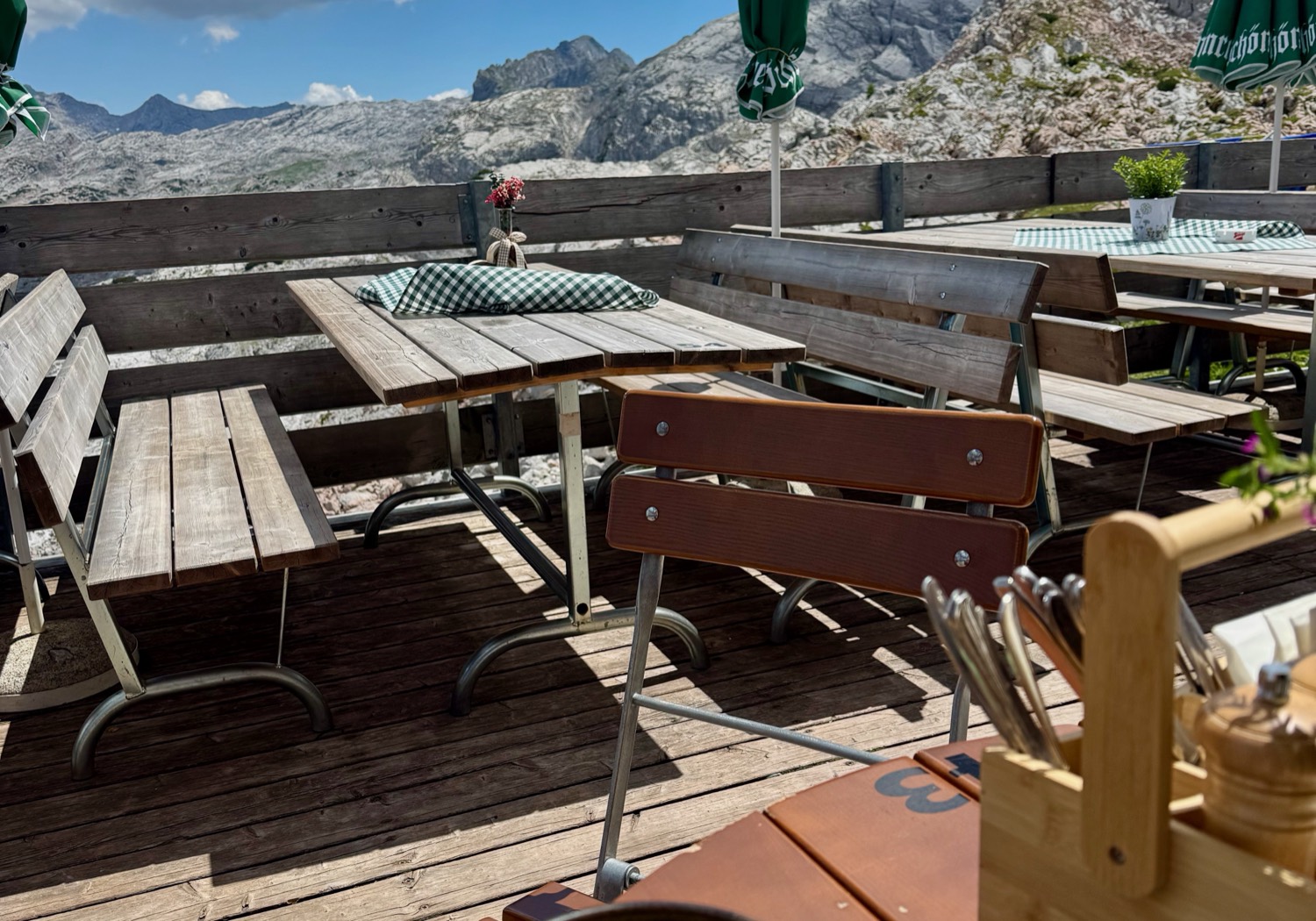
The huts on the plateau — below the Schönfeldspitze, and the terrace between the hard days.
One departure: 3–10 July 2027.
You don’t need to be an athlete. You do need to prepare.
Enrolment includes a preparation program that starts about three months out and runs at your own pace. It is not a boot camp. It begins with a call — with Dirk, not a doctor — about what you can comfortably do today, and from there he builds you a plan: conditioning for sustained climbing at altitude, and nutrition to go with it. We check in along the way.
Part of it is physical and part of it is your head. A workable fear of heights is normal and manageable with preparation — plenty of people, Dirk included, have to work for it. If heights are a hard no for you, this is not the trip, and we will tell you so.
Think of it as a self-guided fitness program for leaders, with the mountain as the reason to actually do it.
Ask about the preparation programWhat to bring, what we provide.
You bring two things that have to fit you personally:
- a 30–35 litre backpack — enough for four days on the plateau; we can recommend models
- proper hiking boots with a stiff sole for walking on rock — not trainers
We provide and fit the technical kit for the via ferrata:
- helmet
- harness
- carabiners — a via ferrata lanyard set
We buy this for you, and the owner of the local mountain shop comes in to size the helmet and harness in person. Afterwards it is yours — keep it for the next trip, or donate it to a local climbing club. The rest of the packing list comes with your preparation plan.
Serious country, run seriously.
A certified local mountain guide is with the group for the entire trip. Strictly speaking the terrain does not require one; having one means someone is always reading how the group is doing, adjusting the day to what the group can actually manage, and passing on the mountain-craft that only comes from living there. Dirk designed the trip and has known these mountains for fifty years, and he travels as a member of the group, not as the guide.
For four days you are genuinely off the grid — no cell signal on the plateau. You are not on your own: mountain rescue, the Bergwacht, can reach the huts within about two hours. But between the huts you find your own way and deal with what the day brings. That is part of why people come.
Dirk has walked this ground for fifty years and still feels the thrill every time — a section to cross, the weather, the length of a day. There is always something.
Talk to us about whether it is a fitOne idea, and the people to test it on.
The aim is the same as the other retreats: one idea that changes how you lead — not a list of takeaways, one that holds because you worked it out somewhere real. What that idea is will be yours; the plateau is unusually good at surfacing it.
You also come back with more than you left with. A few days at altitude, off the phone, generate energy and clarity out of proportion to the effort. And you will have spent four unplugged days with a small group of senior leaders from other industries — the kind of group people keep comparing notes with long after the trip.
And something quieter: you will have done a hard, exposed thing you were not sure of. That has a way of resetting what counts as difficult back at the desk.
Request a place for 3–10 July 2027.
The group is small and chosen with care, so it starts with a conversation — about fit, timing, and how to prepare. Book a call and we will take it from there.